In this article
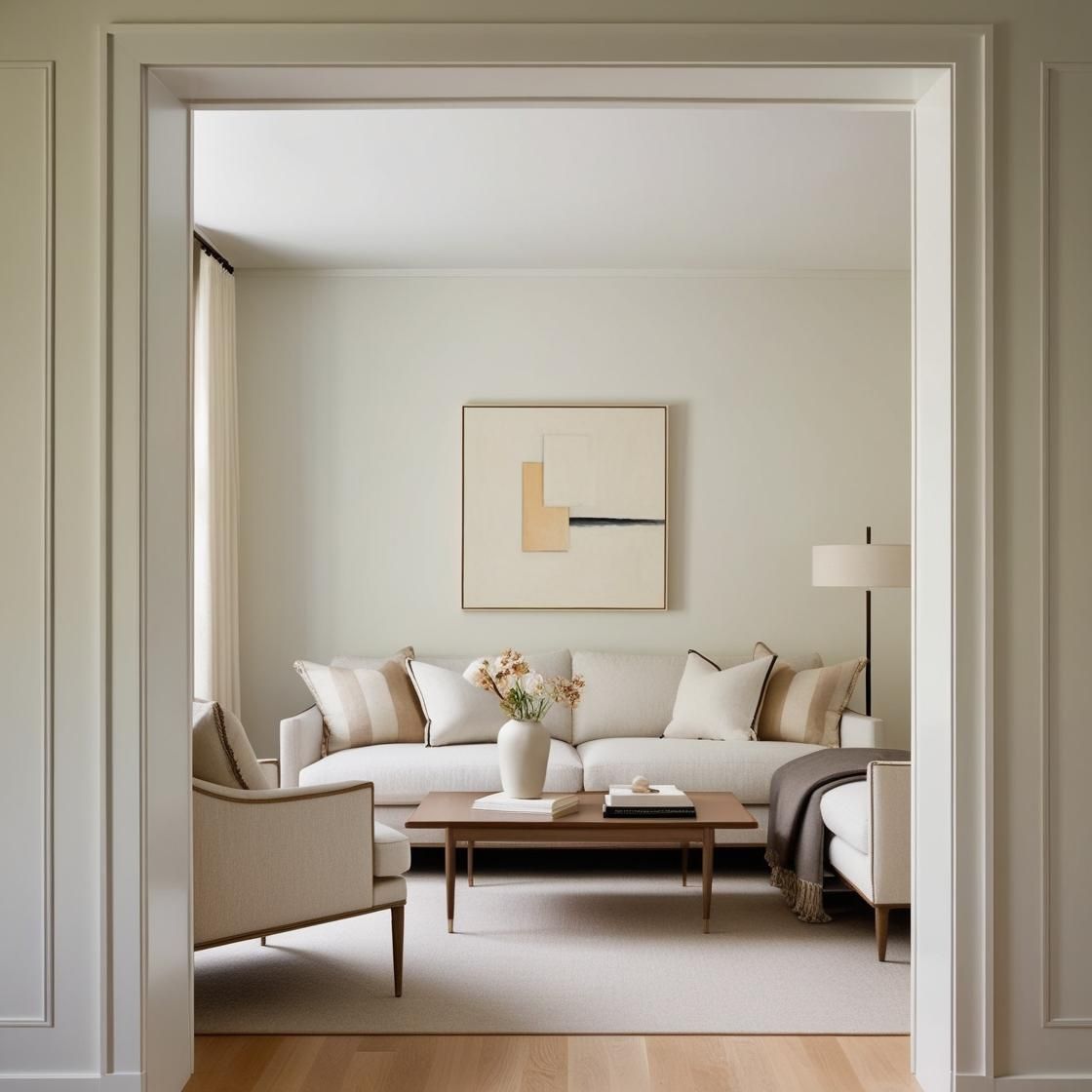
This living room is a clear example of warm minimalism: simplicity with enough softness that the space still invites you in. Clean architectural lines, soft light, and a tonal palette create calm. Layered textures keep the room from feeling bare.
I return to this idea often in residential design. A home does not need more objects to feel complete. It needs the right relationships between light, furniture, materials, and the way people use the room.
How the room stays soft
An off-white sofa carries a mix of ivory, beige, and taupe pillows that add dimension without breaking the quiet atmosphere. A minimalist abstract artwork in sand, cream, and a single black accent grounds the wall. Wood appears in the coffee table and side chairs, warming the creamy surroundings. A soft beige rug and pale floors extend the airy feel. A simple floor lamp and a vase of dried florals finish the scene with almost no visual noise.
Bring the idea into planning
If you are renovating or building, warm minimalism works best when storage is planned, the palette is limited, and furniture sizes are checked against the plan. That is where interior design and architectural thinking support each other. For more on fewer materials done well, see Restraint: Why Fewer Materials Make a Calmer Home.
Soft earth tones, wood, and a short list of textures can create a living room that feels elegant and restful. Choose with intention, and let empty space do part of the work.
Want a calmer home designed on purpose?
I work remotely with homeowners on interior design and residential planning, so restraint becomes comfort instead of emptiness.

Arch Design by B, LLC
See Your Home Before It’s Built.