In this article
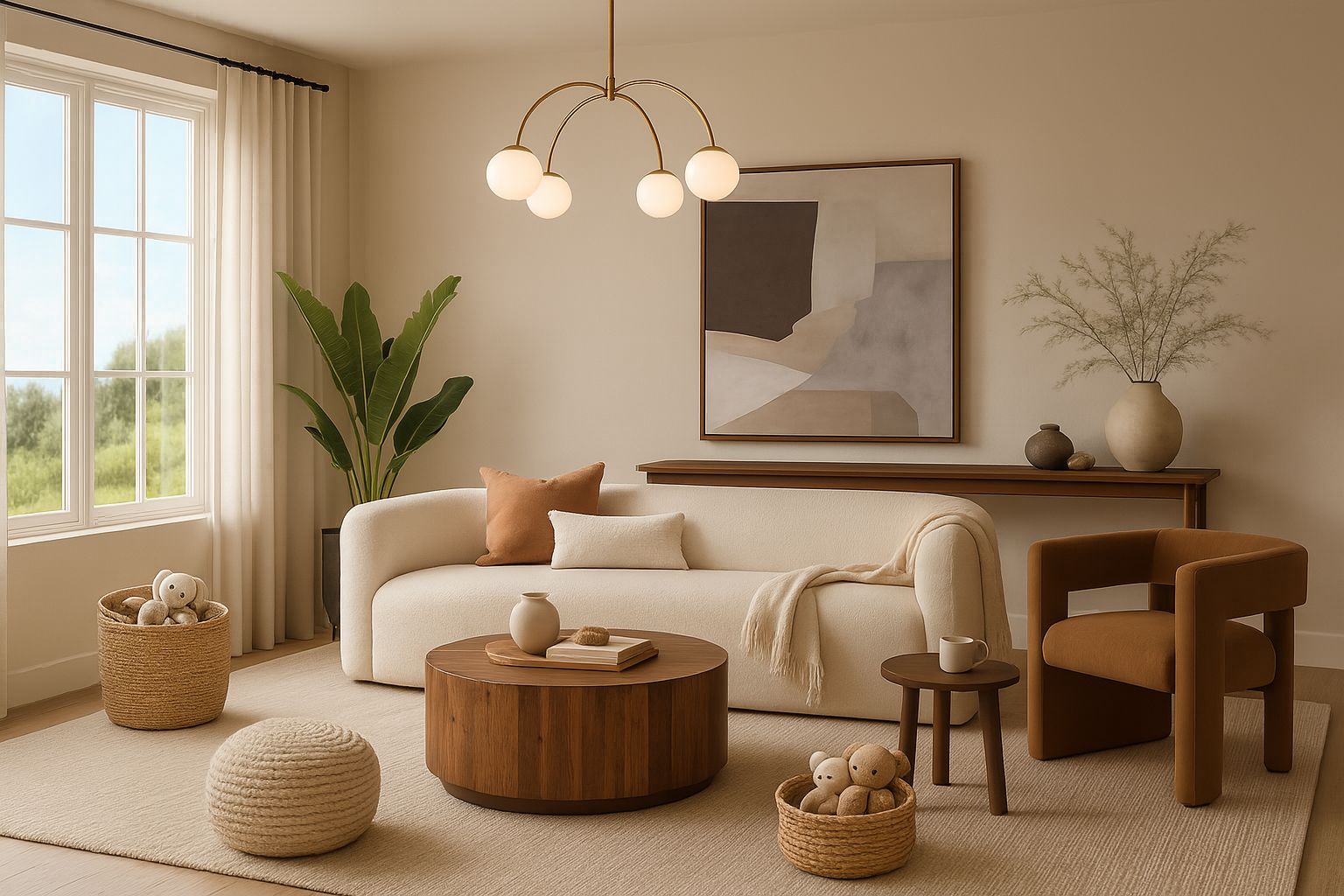
This living room is a study in warm minimalism: soft curves, natural textures, and a gentle earth-tone palette. Labels like organic modern are useful as shorthand, but what matters is the feeling of the room. It should invite people in, support family life, and stay calm enough that the architecture and daylight can do their work.
What the room is doing
At the center sits a plush, off-white boucle sofa with a rounded silhouette, softened by terracotta and cream cushions and a casually draped throw. In front, a low cylindrical wood coffee table anchors the seating group. Nearby, a sculptural armchair in a warm velvet tone offers a second place to settle.
Natural materials carry the mood: a knit pouf on a sisal rug, woven baskets, ceramic vessels, and a large plant near the window. An abstract painting keeps the palette of beiges, taupes, and charcoal together. Linen drapes and a simple multi-globe chandelier finish the room with soft light instead of hard sparkle.
From mood to a home that works
The pieces in this room succeed because they agree with each other. That same principle guides residential design: fewer materials, clearer circulation, furniture that fits the plan, and lighting that supports evenings as well as daytime. Whether you are furnishing an existing room or designing a new house, the living room should feel like part of the whole home, not a showroom corner.
Soft forms, natural materials, and a restrained palette can make a living room feel both modern and welcoming. Use the look as a guide for comfort and cohesion, then plan the room so it works with your real life.
Ready to turn inspiration into a plan?
I design residential interiors remotely so you can see the mood, the layout, and the materials together before you buy or build.

Arch Design by B, LLC
See Your Home Before It’s Built.